

What Is a Hybrid Car and How Does It Work? (2026 Guide)
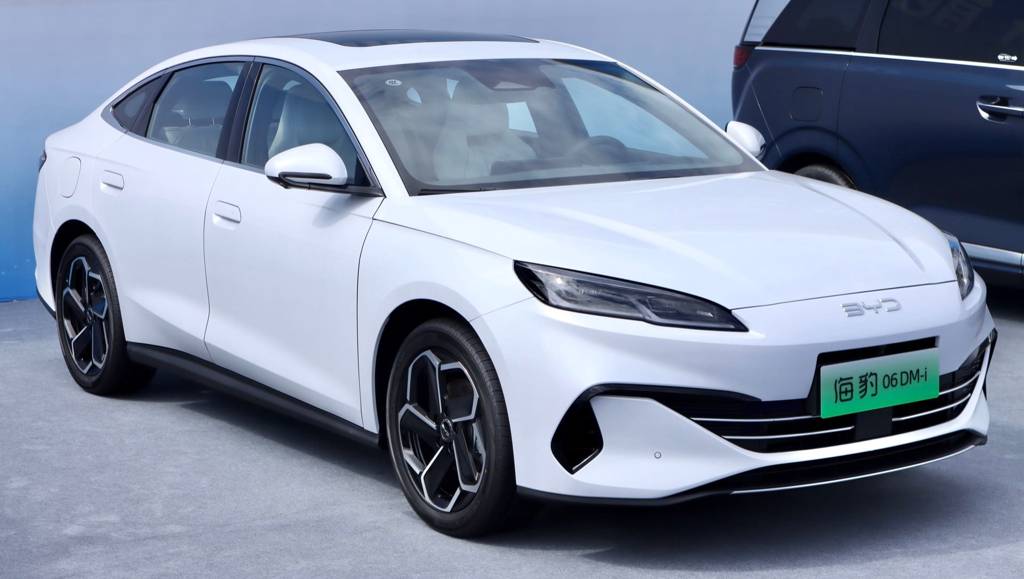
Short answer: a hybrid car pairs a petrol engine with one or more electric motors and a battery, using both to move the car more efficiently than an engine alone. A full hybrid never needs plugging in: the engine and regenerative braking keep its battery charged, so you refuel it like any petrol car but burn less fuel. Plug-in hybrids add a bigger battery you charge from a socket for electric-only driving on shorter trips.
This guide compares mild, full, plug-in and range-extender hybrids with fully electric cars, shows how energy flows in each driving mode, uses US EPA figures for the fuel saving, and covers maintenance, battery life and UAE warranty terms.
Key takeaways
- Definition: a hybrid pairs a petrol engine with an electric motor and battery, and a standard hybrid charges itself rather than plugging in.
- Types: mild hybrids only assist the engine, full hybrids drive short low-speed stretches on electricity, plug-ins charge from the grid.
- Real savings: the 2025 Toyota RAV4 Hybrid AWD returns 39 mpg against 30 mpg for the petrol RAV4 in EPA testing, about 21% less fuel.
- Maintenance: the US Department of Energy says hybrid maintenance is similar to a conventional car's.
- UAE warranty: Toyota UAE covers hybrid batteries for 8 years or 160,000 km, against 3 years or 100,000 km for the vehicle.
- Local demand: CarSwitch says hybrids draw about 25% of UAE used-car searches but only around 1% of listings.
What is a hybrid car? The hybrid car meaning in plain language
"Hybrid" means a mix of two power sources. According to the US Department of Energy's Alternative Fuels Data Center, a hybrid electric vehicle (HEV) uses a petrol engine together with one or more battery-powered electric motors. That battery cannot be charged from a plug: the engine tops it up, as does regenerative braking, which turns some of the car's forward motion back into electricity as you slow down.
The electric side lets the engine do less work, so carmakers can fit a smaller one. In a parallel hybrid, the most common type, both the engine and the motor can turn the wheels. In a series hybrid, only the motor drives the wheels and the engine works as a generator, a layout more common in plug-in models.
Types of hybrid cars: mild, full, plug-in and range extender
The types differ in whether you can plug in, whether they drive on electricity alone, and battery size. Battery electric cars (BEVs) are below for comparison.
| Type | Plugs in? | Electric-only driving? | Battery size examples | Role of the petrol engine |
|---|---|---|---|---|
| Mild hybrid (MHEV) | No | No | Under 1 kWh; Hyundai's 48-volt battery is 0.44 kWh | Main power source; the motor assists |
| Full hybrid (HEV) | No | Short distances at low speeds | Bigger than a mild hybrid's, far smaller than a plug-in's | Drives the car and charges the battery |
| Plug-in hybrid (PHEV) | Yes | Yes: 45 miles (about 72 km) EPA, 2025 Prius Plug-in SE | 13.6 kWh (2025 Prius Plug-in), 18.3 kWh (BYD Sealion 5 PHEV), 22.7 kWh (2026 RAV4 PHEV) | Takes over when the battery runs low |
| Range extender (EREV) | Model-dependent | Yes; the motor always drives the wheels | 17.8 kWh (Mazda MX-30 R-EV) | Only generates electricity |
| Battery electric (BEV) | Yes | Always | The largest of the five | None; no engine or fuel tank |
Mild hybrid (MHEV)
A mild hybrid, usually a 48-volt system, cannot drive on electricity alone: a small motor-generator assists the engine and runs stop-start, so it costs less and saves less. Supplier Valeo says its 48V belt starter generator improves WLTP fuel economy by up to 6% against stop-start alone.
Full hybrid (HEV)
A full hybrid has a bigger battery and motor, so it drives short low-speed distances on electricity alone. The Department of Energy notes larger fuel savings at a higher price. The Prius and RAV4 Hybrid are familiar examples, and this is what most people mean by "hybrid".
Plug-in hybrid car (PHEV)
A plug-in hybrid charges from an outlet as well as from the engine and regenerative braking. The Department of Energy explains that it drives on electricity first and switches to the engine once that charge is used up; in blended designs, fueleconomy.gov notes, electric-only driving usually happens only at low speeds. Toyota says the 2026 RAV4 PHEV grows to 22.7 kWh from 18.1 kWh, with an EPA-estimated 54 miles of range for the SE.
Range extender and series hybrids (EREV)
A range extender is always driven by its motor; the engine only makes electricity. Mazda says the MX-30 R-EV uses a rotary engine as a generator, pairing a 17.8 kWh battery (85 km of WLTP range) with a 50-litre tank. Nissan's e-POWER in the Qashqai works the same way without a charging port.
How does a hybrid car work?
Every hybrid manages the same trade-off: use the motor where it helps most, and the engine where it makes sense. The power electronics choose; you just press the accelerator.
Key components of a hybrid car
The Alternative Fuels Data Center lists these parts:
- Petrol engine and fuel tank, with exhaust and catalytic converter.
- Electric traction motor, which drives the wheels and is turned by them under braking.
- Generator, which makes electricity.
- Traction battery pack, which stores it.
- Power electronics controller, which manages the flow between battery and motor.
- DC/DC converter and 12-volt battery for low-voltage accessories.
- Thermal system for cooling.
- Transmission, which sends power to the wheels.
A plug-in hybrid adds a charge port and onboard charger.
How energy flows in each driving mode
The US government's fueleconomy.gov guide to hybrid technology breaks it into a few situations:
- Pulling away and low speeds: the motor can move the car alone, drawing energy from the battery.
- Accelerating and climbing hills: the motor adds its power to the engine's, which is what allows a smaller engine.
- Braking: the forward motion of the wheels turns the motor, generating electricity for the battery.
- Stopped: the engine switches off, so no fuel is burned at the lights.
A plug-in hybrid uses its charged battery first, then the engine. In a range extender, power always reaches the wheels through the motor.
Power-split hybrids explained simply
According to fueleconomy.gov, Toyota's Hybrid System combines an engine, an electric motor, a generator, a power split device and a high-capacity battery. That device is a planetary gear set linking the engine and two motor-generators (MG1 and MG2 in the fifth-generation Prius Prime) to the wheels at once. Rather than shifting fixed gears, it varies MG1's speed to set how much engine power reaches the wheels directly and how much becomes electricity, hence the name e-CVT.
How much fuel does a hybrid car save?
The clearest test compares one model with and without hybrid power. These are official US EPA figures from fueleconomy.gov, in US units at US fuel prices:
| Measure | 2025 Toyota RAV4 (petrol) | 2025 Toyota RAV4 Hybrid AWD |
|---|---|---|
| Combined fuel economy | 30 mpg | 39 mpg |
| Approximate metric equivalent | 7.8 L/100 km | 6.0 L/100 km |
| Fuel used per 100 miles | 3.3 gallons | 2.6 gallons |
| Estimated annual fuel cost (US) | $2,100 | $1,600 |
The hybrid goes about 30% further per gallon and uses about 21% less fuel, an estimated $500 a year saved on the EPA's US assumptions. Your own saving depends on local fuel prices and how you drive.
Other figures agree: the 2026 RAV4 lineup on fueleconomy.gov is hybrid-only at 38 to 43 mpg, and the 2025 Prius FWD is rated at 57 mpg. Charged regularly, plug-in hybrids use roughly 30% to 60% less petroleum than conventional cars.
Advantages and disadvantages of hybrid cars
Advantages
- Better fuel economy than an equivalent petrol car.
- Lower emissions, since less fuel is burned.
- Longer-lasting brakes, thanks to regenerative braking.
- No charging needed for a standard hybrid.
- Electric driving on short trips in a plug-in hybrid.
Disadvantages
- Higher purchase price. The Department of Energy puts plug-ins roughly $4,000 to $8,000 above a comparable non-plug-in hybrid.
- A high-voltage battery that is a significant expense to replace out of warranty.
- Modest savings from mild hybrids, which cannot drive on electricity alone.
- Plug-ins need charging: in US terms, several hours from a 120-volt outlet, 1 to 4 hours at 240 volts, or about 30 minutes to 80% on a DC fast charger where supported.
- Real-world plug-in results can disappoint: the ICCT reported in September 2025 that real-world CO2 from European plug-in hybrids was around five times official figures.
Hybrid maintenance, battery life and warranty
The US Department of Energy says the maintenance needs of hybrids and plug-in hybrids are similar to those of conventional vehicles, and that regenerative braking helps brakes last longer (AFDC). Our comparison of electric vehicle maintenance vs gas cars shows where running costs diverge, and our brake and suspension repair service covers the wear that remains.
How long does a hybrid battery last?
AAA has reported that hybrid batteries typically last 100,000 to 150,000 miles (about 160,000 to 240,000 km), possibly up to 200,000 miles. A battery health and thermal management check is worth doing on any used hybrid.
Hybrid battery warranty in the UAE
Toyota UAE (Al-Futtaim) covers the hybrid battery for 8 years or 160,000 km, against 3 years or 100,000 km for the vehicle warranty; Lexus UAE is reported to offer the same battery cover. Check your own car's terms, and consider extended warranty options beyond the factory cover.
What does a hybrid battery replacement cost?
Out of warranty, a replacement is a significant expense: US insurer and retailer sources put it at roughly US$2,000 to US$8,000, of which about $1,500 to $4,000 is parts. Treat that as a rough US guide only; no reliable UAE figure is published. Before accepting a replacement, have the fault diagnosed by a high-voltage battery repair specialist.
Hybrid cars in the UAE and around the world in 2026
The International Energy Agency counts plug-in hybrids and battery electric cars as "electric cars" but excludes conventional hybrids. On that basis, the IEA Global EV Outlook 2026 reports more than 20 million electric cars sold worldwide in 2025, up 20% and about 25% of new cars, with battery electric models at 65% of that total and range extenders under 7%. Conventional hybrids are about a third of car sales in Japan.
The Middle East is smaller but growing fast. The IEA puts regional electric car sales at around 75,000 in 2025, up 40%, with the UAE accounting for roughly half. BYD held about 60% of the UAE electric car market and Tesla about 15%. BYD's UAE plug-in hybrids include the Sealion 5 PHEV, reported to use an 18.3 kWh battery; see our BYD service page.
Used hybrids are in demand. A CarSwitch report of 4 September 2026 found hybrids draw about 25% of UAE used-car searches but only around 1% of listings. If you find one, a full check-up and diagnostic inspection before buying is a sensible precaution.
Is a hybrid car right for you?
A hybrid is middle ground between petrol and fully electric, so the answer depends on how you drive.
- A full hybrid if you want lower fuel use without changing your routine, or cannot charge at home or work.
- A plug-in hybrid if you can charge regularly and most daily trips fit the electric range.
- A range extender if you like electric driving but want a fuel tank as back-up.
- A mild hybrid if budget matters most and a modest gain is enough.
- A fully electric car if charging is easy; our guide to hybrid vs fully electric cars compares them.
Weigh the price premium, the fuel saving at local prices, and the battery warranty left on a used car.
Frequently asked questions
Do hybrid cars need to be plugged in?
Standard full and mild hybrids never need plugging in: they charge their batteries through the engine and regenerative braking, and you refuel them with petrol. Only plug-in hybrids and battery electric cars charge from an outlet.
Do hybrid cars charge themselves?
Yes. A conventional hybrid makes all its own electricity: the engine charges the battery, and so does regenerative braking as you slow down.
What is the difference between a hybrid and a plug-in hybrid car?
A plug-in hybrid has a larger battery you charge from an outlet, so it covers real distances on electricity alone: 45 miles (about 72 km) EPA for the 2025 Prius Plug-in SE. A regular hybrid cannot be plugged in and drives only short low-speed stretches on electricity.
What is the difference between a mild and a full hybrid?
A full hybrid can move the car on electric power alone at low speeds; a mild hybrid cannot. Mild hybrids are usually 48-volt systems with batteries under 1 kWh.
How long does a hybrid battery last?
AAA has reported typical hybrid battery life of 100,000 to 150,000 miles (about 160,000 to 240,000 km), and possibly up to 200,000 miles. In the UAE, Toyota covers hybrid batteries for 8 years or 160,000 km.
How much does it cost to replace a hybrid battery?
US insurer and retailer sources put a replacement at roughly US$2,000 to US$8,000 with labour. That is a rough US range; no reliable UAE figure is published.
Are hybrid cars worth it?
That depends on your mileage, local fuel prices and how long you keep the car. In EPA testing the RAV4 Hybrid used about 21% less fuel than the petrol version.
Service your hybrid car at EVS UAE
A hybrid combines a petrol engine with a high-voltage electrical system, so it needs a workshop that works on both. At our UAE workshops, EVS UAE offers mechanical servicing, including full check-ups and diagnostics, alongside high-voltage battery repairs. To have a used hybrid checked or an older battery assessed, contact EVS UAE.